The Federal Republic of Nigeria is a country located in west Africa. It is the most populous of the African continent. Bordered to the west by Benin, on the east by Chad and Cameroon, Lake Chad in the northeast, Niger in the North and the gulf of Guinea in the South.
Nigeria has a long-lived history that dates back to early human populations around 9,000 BC although was probably inhabited beforehand.The area around the River Benue and the Cross River is the place of origin of the Bantu spread in waves throughout the Central and Southern Africa from the fifth century B.C.
To learn more about this fabulous place we must show all the qualities of this country,which makes it wonderful and unique in the world. It is therefore necessary to investigate so deep in each of these aspects, and explain in a concise manner.
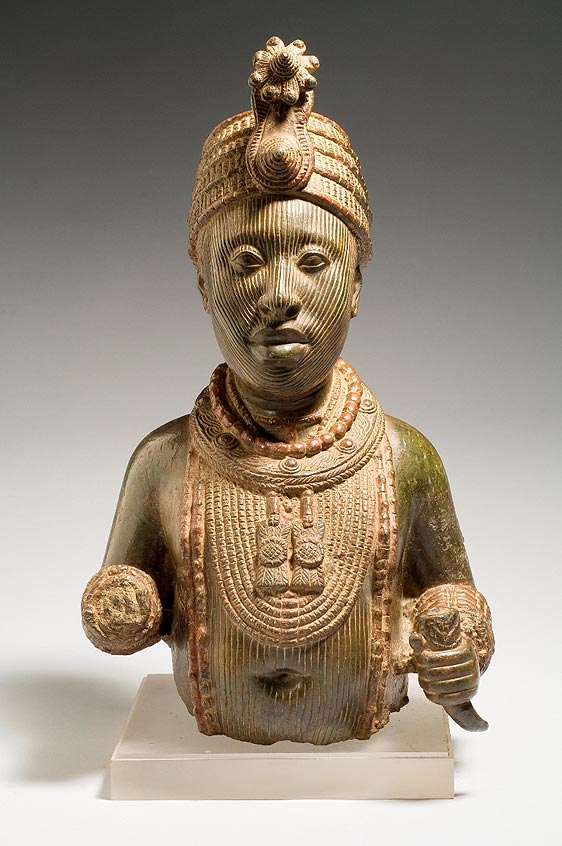
The first thing that we will return to Nigeria are their artistic and musical qualities. It is in Nigeria where they have located the most ancient testimonies of the African artwork. In the first place, The oldest sculptures that are known in West Africa are the terracotta of the so-called "culture of Nok", identified in Nigeria in 1943 by Bernard Fagg and whose origins date back to almost two thousand five hundred years. Secondly, Nigeria was the main gate, the via regia, the interest and study of the "black art" in Europe. In this dual role should be added the great diversity of ethnic and stylistic of this country.
The Nigerian art dates
back a long time, over 2000 years by some archeological beliefs. The Nok
Terracotta and the Igbo Ukwu are examples of some excavations that have been
discovered by archeologists to indicate a highly developed artistic and
technologically based civilization. Some of the really old art found shows very
much detail and very distinctive features suggesting technological skills way
back when. The Nok art for instance, has many images made from iron-smelting.
The Igbo artifacts show skills in bronze and copper utensils as well as sacred
objects. The Ife bronze heads are said to represent some of the past Ooni's
(rulers) of Ife.

The Music of Nigeria
includes many kinds of music, because in this country is mixed ethnically
diverse, each one with its own techniques, instruments and songs, although
little is known of its history until the arrival of Europeans. Nigerian music
is included in 12 genres: Hausa, Igbo, Yoruba, Palm Wine, Juju, Apala,
Highlife, Fuji, Yo-pop, Afrobeat, Waka, Afrojùjú...The music was not part of the art, until the arrival of the
Europeans, who introduced his influences being assimilated rapidly.
