viernes, 14 de diciembre de 2012

Customs and Traditions

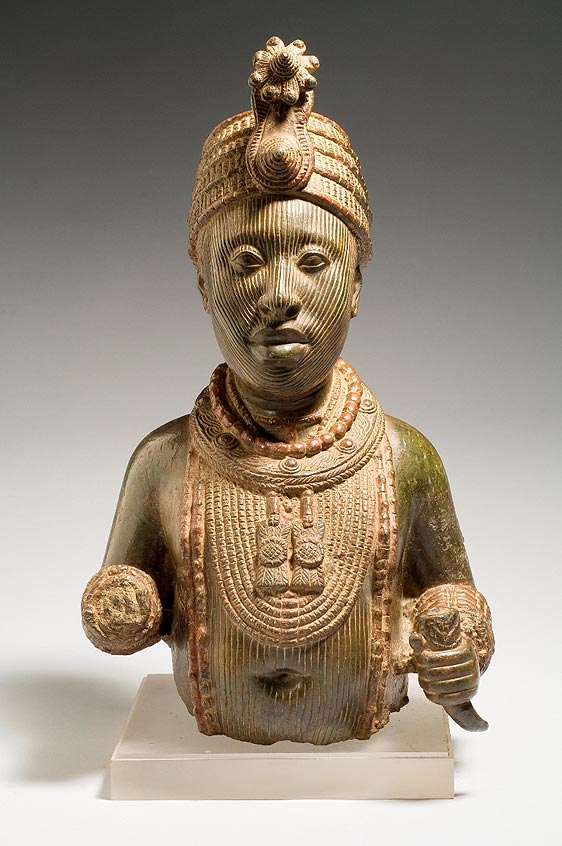
Nigeria has a long and extensive tradition in literature and the arts; and already in the year 500 BC Northern Nigeria nok artists carved in terracotta of Ife, later in the year 1200 began the work in bronze of Benin, which until today are known throughout the world. Currently, traditional folk art shows the influence of Western art styles. Traditional oral literature has had an important impact on Nigerian novelists of the century XX known worldwide, as Amos Tutuola, who is in the winner of the prize Nobel Wole Soyinka, Chinua Achebe and more recently known novelist Ben Okri.

In the culture of the peoples have also rooted rituals of the traditional religions. Some of them have become so popular that they have finished becoming festivals of great tourist attraction. The Osogbo Festival of Ousun is a clear example of this. The tribe of the Yoruba in Nigeria worships the 401 gods, called Orishas, who joined with spirituality and nature. Among the gods Orishas are the most important as: Elegua, Oggún, Oshosi, Obatala, Yemaya, Oshun, Shango, Oya, Orunmila and Olofin. Due to the slavery of black Africans in Cuba makes remote times, they brought the religion to Brazil where it is known as candomblé, Haiti where is called Voodoo-Voodoun and Jamaica where he receives the name of Obeah. As already mentioned the Yoruba religion has its roots in countries like Brazil, Haiti, Jamaica and especially Cuba, where it is mixed with depth with the culture of its inhabitants. 500 Years ago, to be precise since 1615, the Orishas already belong to the culture of Cuba, they are double-sex and have human characteristics as others; they fight, they are jealous, sad or talkative. The Yoruba culture is kept alive by their colorful and extravagant costumes, in addition to dances and songs, rhythms and trance possessions which are the means through which interacts with the orishas, in that way the Yoruba get the gods to influence in their daily lives to be guided toward a deeper and more complete during his existence in this world.

In all countries of the world there are celebrations, or characteristic festivals that highlight his people, his people, their customs and traditions. This is the exception and Nigeria shines through one of the great celebrations of Nigerians, is the festival of Sallah celebrated once Ramadan ends. Then, after 69 days gives way to the celebration of the Tabaski, these dates vary depending on the period of Islamic fasting but usually in late January or early February. Another festival, which is of less importance than the previous two, and that perhaps is because it was created in 2008 but not why not you can enjoy in the same way as the previous ones, since in addition to being an art with fans around the world, there are in Nigeria and leverage what provides them the Festival of fishing and Argungu culture mixed with the show, which is held on the banks of the River Sokoto to mid or late February. This feast is characterised by the competencies that are performed at the festival as Championships in boxing, traditional wrestling, choice of the farmer of the year, racing camels and donkeys, ducks hunting, but no doubt more impressive competition is offered this unique battle to get the largest one hour fish.

Nigerians throughout the year are in contact with tourists from all over the world, they offer a wide range of customs and traditions and beautiful places to visit, for example there is the island of Lagos which has a commercial and administrative centre which is located in the heart of the city, joined to the Mainland via two bridges. Unfortunately Lakes is considered one of the cities most expensive in the world. But there are also other options such as Ikoyi and Victoria which are connected with the Islands, and both are reflected with residential areas and beautiful gardens. The National Museum at Onikan on Lagos Island houses numerous exhibitions of the old Nigeria and has a centre of craftsmanship that is sold with fixed prices. In the Jankara market on Lagos Island tourists may negotiate to buy locally dyed cotton and assorted leather goods. Ibadan is famous for the University and the market, which is also one of the largest in Nigeria. The traditional village of Oyo has some Portuguese colonial style houses and should be noted that it was the capital of the old Yoruba Empire. Oshogbo is the Centre of the internationally renowned School of Oshogbo art, House of the polls and Grove of Oshun, the Yoruba of fertility goddess. The famous Oshun shrineis can be visited there. The Oshun is held weekends of August each year. Ile-Ife, the ancient name of the town of Ife, is the cradle of Yoruba culture, and includes the Ife Museum, which has many bronzes and carved terracotta dated before the 13th century. It is an important batik.

Characteristics of each country, town or city meals is what makes it more interesting to their tenants, and at the same time marked a great difference regarding the tastes that lead to foremothers traditions of their ancestors which are kept in force to continue with that union that never will be lost and will continue generations after generations until today. This is why and much more than the most typical dish of the Nigerian kitchen is the soup's pepper which is a spicy sauce bathing three dams of fish or beef or goat. It is accompanied by rice or other grains, like gari or eba. A typical aperitif is the dodo, which are pieces of fried banana. The places where we serve varied appetizers like fried chicken or fish cakes abound in the Nigerian cities. Rural areas of the North are characterized by magnificent yogurts made by fulani women; These are usually served in a bowl of pumpkin and it can be mixed with ground millet balls. As a Council, the water must be taken always bottled.

martes, 11 de diciembre de 2012

Social Science and Education

Although not everything is negative for Nigeria since account with enough positives, that two of them have already mentioned during this trial, the population that is of 170.123.740 inhabitants in July of this year. This index has increased compared to the year 2000 which at that time was of approximately 123.000.000 another aspect mentioned above, is the growth being their export destination countries: USA, India, Brazil and Spain as the most prominent buyers of products exporting Nigeria, these include electricity, oil and natural gas. Literacy, quality of education, the decrease in the rate of death due to HIV, the delivery of health services such as the control of certain diseases originating in the area, the reduction of unemployment in the country and above all, the quality of life, all these together have also been factors that have improved in the past 10 years giving the country a better opinion by the world community.

One of the factors that there was no further before are literacy and education, since both have prompted the Nigerians to improve as individuals. Since the 1830s religion and missionaries were commissioned to expand educational way from the North of Nigeria, continued it South and then to the coastal regions. Free primary education was established in 1976 in entire Nigeria but still not all valued and took advantage of this opportunity, is why thanks to the new educational system, in 1982 the primary schooling became compulsory 9-year, on the other hand secondary education is divided into two successive stages of 3 years each, the negative of that secondary education is not compulsory is that only 36% of the population is still forming educationally, but lower that percentage, the good is that the minimum are trained to serve the world and rescue up to the Nigerian poor are literate and educated at least at a basic level.


Literature

Nigerian literature was influenced by different sources; western influences began affecting Nigerian literature as early as the eighth century when Arabic ideas and culture were introduced to Africa. During the fourteenth century, written and spoken Arabic flourished in northern Nigeria and by the seventeenth century, some Hausa literature had been translated into Arabic. Christian missionaries accelerated the importation of western education into Nigeria during the nineteenth century.
 
Nigerian literature was in its infancy orally and through contact with other cultures such as Muslims, Spanish and Portuguese, who were the first Europeans who traded with them, his writing took contributions from each of these cultures. Nigerian literature is well consolidated and is recognized worldwide as he speaks of his own history and because over time has not stopped side roots, beliefs and values. General Nigerian writing stands very much for the reality of his stories, truth with which exemplifies its suffering and its development as a society.

One of the most important exponent of lieterature was Wole Soyinka was the first Nigerian writer to get the Noble Prize. In 1967, is arrested during the civil war for having written an article calling for an armistice. Charged with conspiracy, is locked up for 20 months and only at the end of 1969 is released.


sábado, 29 de septiembre de 2012

Art and Music


The Federal Republic of Nigeria is a country located in west Africa. It is the most populous of the African continent. Bordered to the west by Benin, on the east by Chad and Cameroon, Lake Chad in the northeast, Niger in the North and the gulf of Guinea in the South.
Nigeria has a long-lived history that dates back to early human populations around 9,000 BC although was probably inhabited beforehand.The area around the River Benue and the Cross River is the place of origin of the Bantu spread in waves throughout the Central and Southern Africa from the fifth century B.C.
To learn more about this fabulous place we must show all the qualities of this country,which makes it wonderful and unique in the world. It is therefore necessary to investigate so deep in each of these aspects, and explain in a concise manner. 
The first thing that we will return to Nigeria are their artistic and musical qualities. It is in Nigeria where they have located the most ancient testimonies of the African artwork. In the first place, The oldest sculptures that are known in West Africa are the terracotta of the so-called "culture of Nok", identified in Nigeria in 1943 by Bernard Fagg and whose origins date back to almost two thousand five hundred years. Secondly, Nigeria was the main gate, the via regia, the interest and study of the "black art" in Europe. In this dual role should be added the great diversity of ethnic and stylistic of this country. 


The Nigerian art dates back a long time, over 2000 years by some archeological beliefs. The Nok Terracotta and the Igbo Ukwu are examples of some excavations that have been discovered by archeologists to indicate a highly developed artistic and technologically based civilization. Some of the really old art found shows very much detail and very distinctive features suggesting technological skills way back when. The Nok art for instance, has many images made from iron-smelting. The Igbo artifacts show skills in bronze and copper utensils as well as sacred objects. The Ife bronze heads are said to represent some of the past Ooni's (rulers) of Ife.The Nigerian art dates back a long time, over 2000 years by some archeological beliefs. The Nok Terracotta and the Igbo Ukwu are examples of some excavations that have been discovered by archeologists to indicate a highly developed artistic and technologically based civilization. Some of the really old art found shows very much detail and very distinctive features suggesting technological skills way back when. The Nok art for instance, has many images made from iron-smelting. The Igbo artifacts show skills in bronze and copper utensils as well as sacred objects. The Ife bronze heads are said to represent some of the past Ooni's (rulers) of Ife.


The Music of Nigeria includes many kinds of music, because in this country is mixed ethnically diverse, each one with its own techniques, instruments and songs, although little is known of its history until the arrival of Europeans. Nigerian music is included in 12 genres: Hausa, Igbo, Yoruba, Palm Wine, Juju, Apala, Highlife, Fuji, Yo-pop, Afrobeat, Waka, Afrojùjú...The music was not part of the art, until the arrival of the Europeans, who introduced his influences being assimilated rapidly.